The Refreshment Room: Why it Exists--Part 2
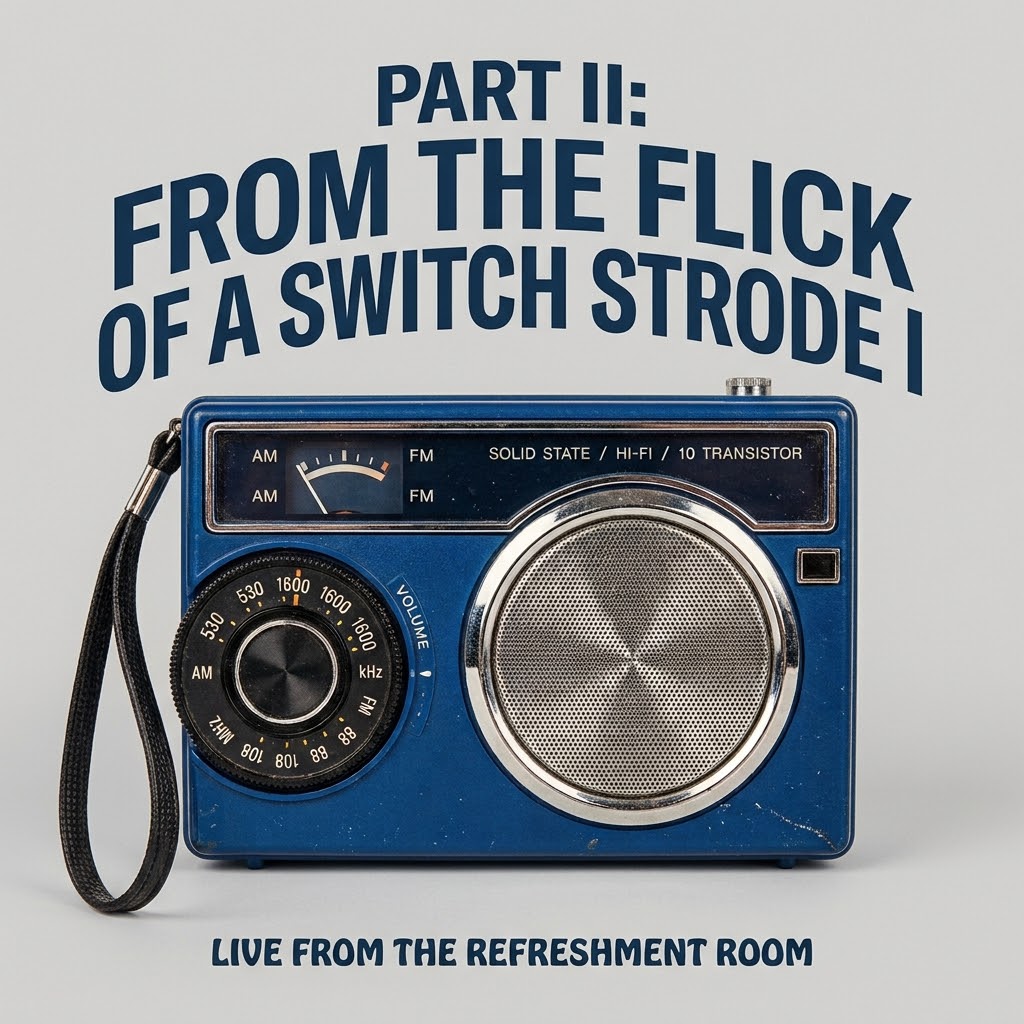
Part II
From the Flick of a Switch Strode I
Listen up, Virginia, let me tell you a story. In 1975 I was 13 years old and a dyed-in-the-wool fan of the Mighty 690, WTIX, an AM pop radio station in New Orleans. As New Orleans has a large Black population, they played a lot of R&B and soul music, along with the hits of the day. Why are the racial demographics important? How do you think I got so funky? It was in the summer of that year that I was in the hospital for some surgery. Not for nothing, but the next time you find yourself complaining about medical treatment, you should know that surgery in the '70s was pretty close to butchery, or at least a field hospital. Perspective is an easy thing to disregard. But that's not what I came to talk to you about.
Nor was ending a sentence with a preposition, but here we are. DAMN! I'm not one to complain about nurturing, or lack thereof; all I will say is my experience with parents is an uneven application of support. Having said that, my parents, in a surprising, and in no small way generous, gesture bought me a Realistic AM/FM transistor radio, complete with earplug, blue with a silver front. I don't have time to explain "Realistic" to you, but to clear up any confusion, the radio existed in the corporeal plane. I was listening one day, looking out the window of my hospital room, and WTIX was playing Chicago, or Stevie Wonder, or Labelle — I couldn't really tell you. I was looking at the back of the radio and noticed the little black switch that read "AM" one direction and "FM" the other. In an act of rebellion — I'd been listening to WTIX since 1969, and recognizing it was no small disrespect to look elsewhere for music — I pushed the switch to the FM position. The radio crackled, and the hiss of an untuned radio sputtered forth. I started turning the tuning wheel and I landed on WRNO. There was a commercial playing, so I waited for the music to start. Without any advance warning, out poured the flapamba intro to the song that changed the way I regarded music. Then came the left-hand E-to-B piano rhythm that starts the song. I was intrigued: very smooth, slightly jazzy — how can this be improved? It sent me on a trajectory that some might say wasted way too many brain cells and memory. I don't know how the stock market works, but I have been known to dominate music quizzes. But that's not what I came to talk to you about.
A sleek piano poured from the radio into the tiny earplug, with all the fidelity of a ship-to-shore phone — quiet, contemplative piano interrupted by a furious bash of guitar, restrained only by structure and lyric. I was mesmerized. The song was a constant clash of sublime and refined chaos — though I am certain this could not be a thing, it's my story, and I reserve the right to take creative liberty, no matter how incongruent. The lyrics told me about a young woman named Rikki who was, obviously, leaving town, and the narrator's feigned, lackadaisical attempt to convince her to stay, or at least keep in touch, wasn't fooling me. By the end, I never looked back. I abandoned WTIX; I wiped away years of loyal listening with the simple flick of a switch. The gesture might seem useless to others, but the impact on me was, and still is, profound. I cannot listen to "Rikki Don't Lose That Number" without a flood of memories of an exact moment in time. But that's not what I came to talk to you about.
Part three will be posted in the coming weeks.